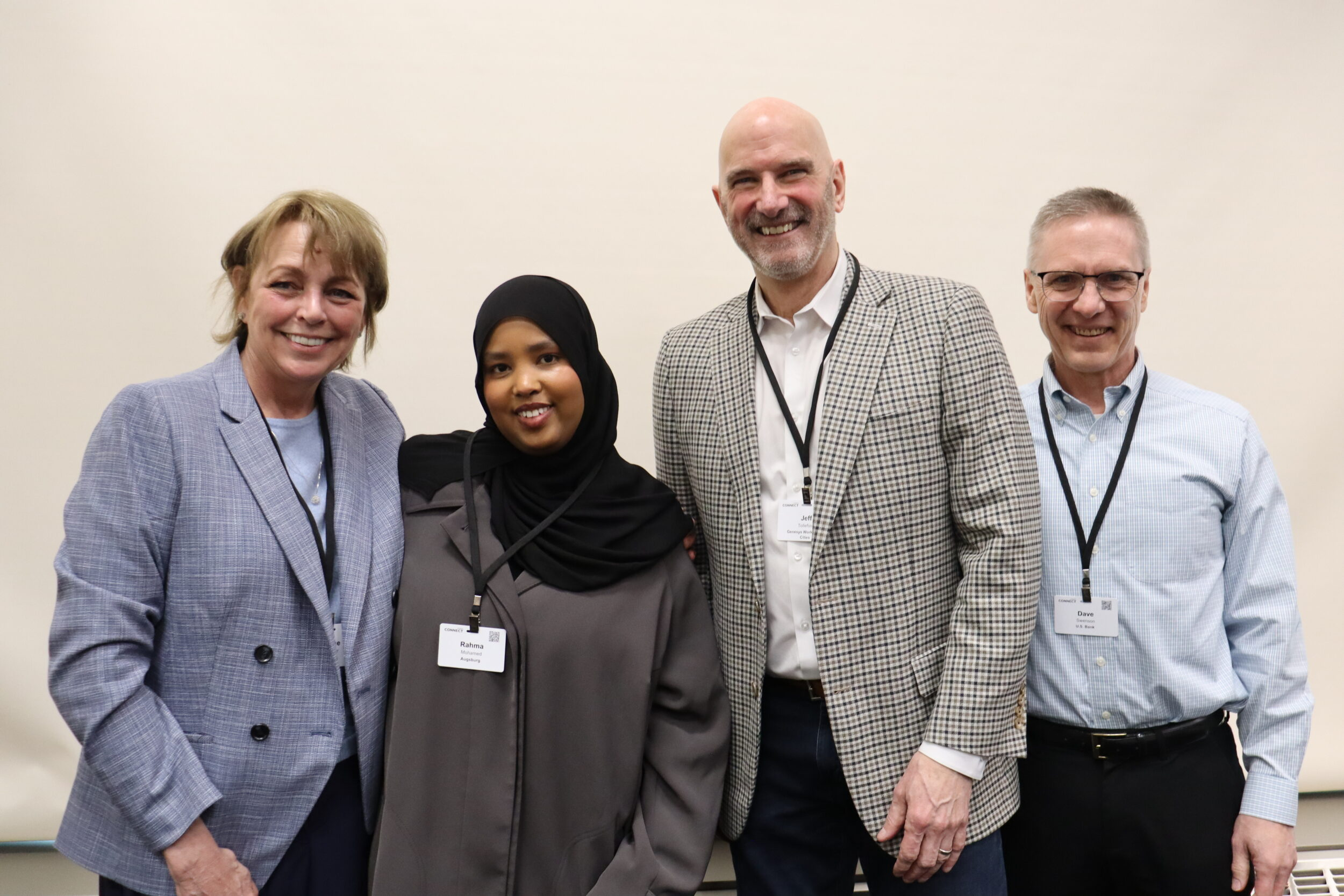
At yesterday’s MnTech Connect conference, I had the opportunity to moderate a panel discussion titled:
“The Talent We’re Missing: Why Minnesota’s Future Tech Workforce Depends on Who We Invest in Today.”
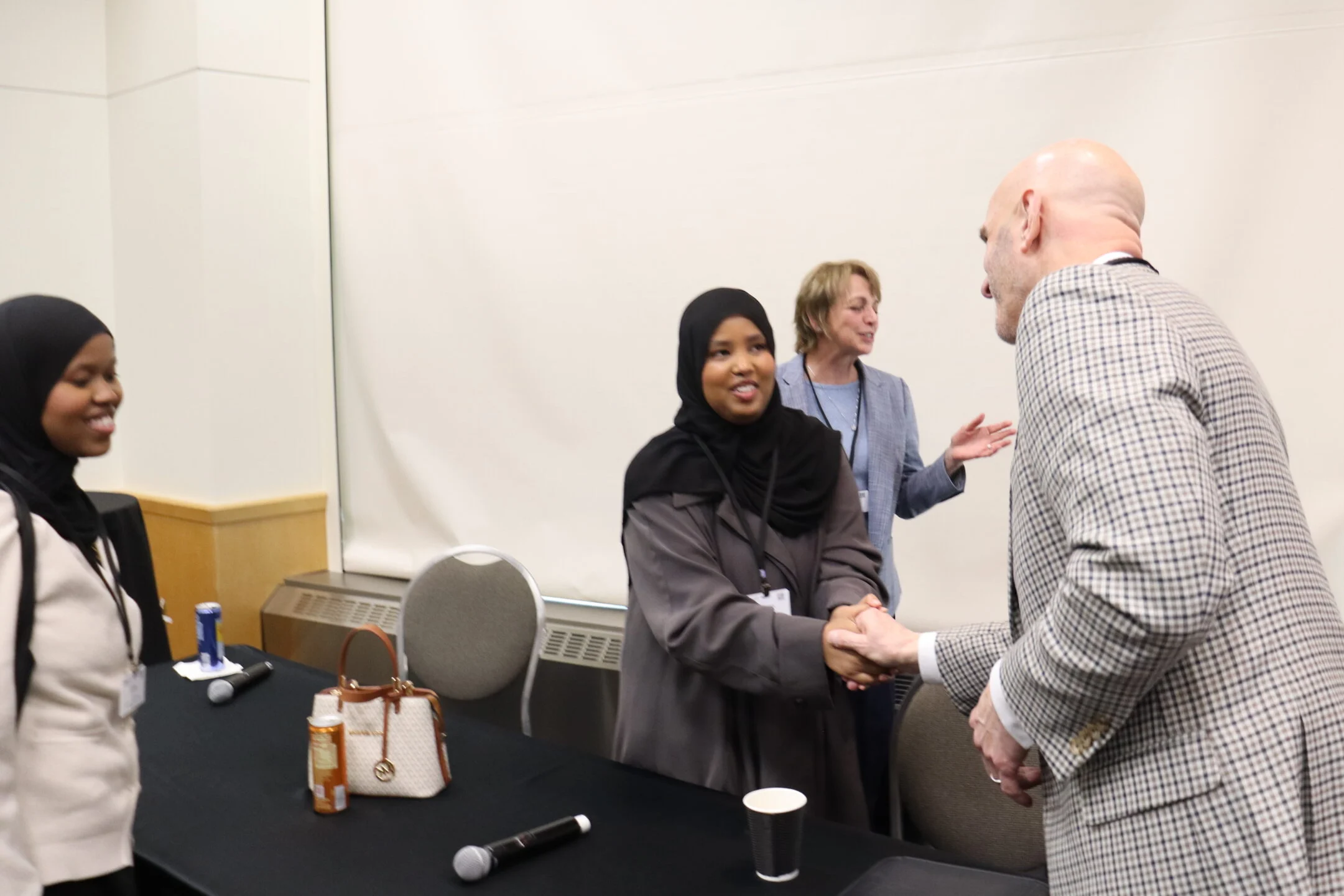
The conversation brought together two corporate leaders, Karine Semmer of Ecolab and Dave Swenson of U.S. Bank, and one remarkable young woman, Rahma Mohamed, a Genesys Works Twin Cities young professional whose journey powerfully illustrated what’s possible when opportunity meets potential.
But the most important takeaway wasn’t about any one program or company. It was the realization that Minnesota does not have a talent shortage. We have a talent access and talent development problem.
Minnesota’s workforce is changing rapidly. As baby boomers retire and technology reshapes nearly every role, the future of our workforce will increasingly come from immigrant communities and communities of color. This next generation is already digitally fluent, highly adaptable, and eager to contribute.
And yet, too many of these young people remain disconnected from meaningful, career-building opportunities, especially in the tech-enabled roles driving Minnesota’s innovation economy.
So the question for all of us (especially employers) is simple:
Are we building our talent pipelines for the Minnesota of yesterday—or the Minnesota of tomorrow?

Several themes emerged from the conversation that should challenge how we think about talent.
- We Need to Rethink “Job Readiness”
Too often, we define talent based on credentials, prior experience, or narrow expectations of professionalism—criteria that unintentionally exclude capable, motivated young people before they ever get a chance.
Employers who have engaged younger, nontraditional talent shared a common realization: many of the assumptions we hold about “job readiness” simply don’t hold up when given the opportunity to see these students in action.
- Exposure Changes Trajectory
One of the most powerful moments came from hearing directly from Rahma, whose career path was transformed by one thing – an opportunity.
Before her first internship, a career in tech wasn’t clearly visible. After it, Rahma not only saw herself in that space, she built a path forward built on self-advocacy, completing multiple internships (Prime Therapeutics, Donaldson Corporation, and the National Marrow Donor Program) and will soon graduate with a degree in Management Information Systems from Augsburg College.
That’s the power of contextualized, real-world learning.
Students can’t pursue what they can’t see, and employers play a critical role in making those pathways visible.
- This Is Not Charity—It’s Strategy
The executives on the panel were clear. This work delivers real business value.
From increased productivity to stronger talent pipelines and improved team engagement, investing in early talent, particularly from overlooked communities, is not just “the right thing to do,” it’s a competitive advantage. As highlighted in the session, companies are seeing measurable impact when they intentionally engage with emerging talent.
- AI Is Changing Entry-Level Work
As AI continues to reshape the workplace, entry-level roles are evolving—not disappearing.
The future will require talent that can think critically, adapt quickly, and work alongside emerging technologies. When young people are equipped with the knowledge and skills to responsibly leverage AI tools and platforms, they can provide outsized capabilities and workplace impact. The question is whether employers are creating pathways to harness that potential.
- Employers Can’t Just Be Talent Consumers. They Must Be Talent Builders
This may have been the most important shift in mindset. Too often, we think of workforce development as something that happens outside our organizations—within schools, nonprofits, or training programs.
But as the discussion made clear, employers must play a larger and more decisive role in shaping the workforce they ultimately depend on.
The Opportunity in Front of Us
What we saw in our breakout session yesterday was not theoretical. It was proof. Proof that when companies engage earlier, create meaningful opportunities, and expand who they consider “talent,” they unlock value for their business and expand opportunity for the next generation. That’s the double bottom line in action.
If there’s one message to carry forward, it’s this: We cannot solve tomorrow’s workforce challenges with yesterday’s talent strategies.
So what can employers do?
- Start – If you’re not currently engaging early talent, pilot just one meaningful opportunity.
- Scale – If you already have internships or early-career programs, expand access and deepen the experience.
- Champion – If you’re not the decision-maker, bring this conversation into your organization and advocate for change.
Organizations like Genesys Works Twin Cities exist to make this easier—partnering with employers to connect business needs with capable, motivated young talent.
The bottom line is that the future workforce of Minnesota is not something we’re waiting for. It’s already here. In our schools, and in our communities. The only question is whether we will intentionally invest in it—or continue to overlook it. Minnesota’s economic future depends on how we respond today.
Let’s choose to invest.